

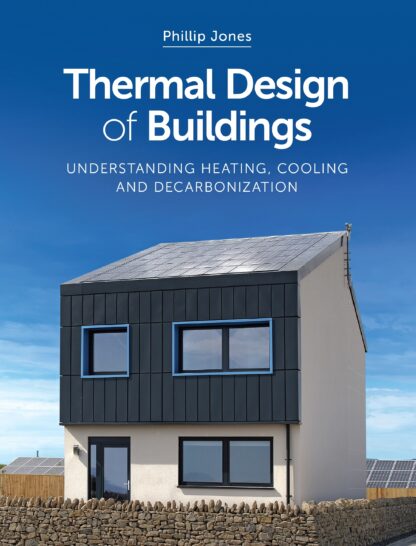

Thermal Design of Buildings
Understanding Heating, Cooling and Decarbonisation
Phillip Jones
The way we heat, cool and ventilate our buildings is central to many of today’s concerns, including providing comfortable, healthy and productive environments, using energy and materials efficiently, and reducing greenhouse gas emissions. As we drive towards a zero-carbon society, design solutions that combine architecture, engineering and the needs of the individual are increasingly being sought.
Thermal Design of Buildings aims to provide an understanding from which such solutions can be developed, placing technological developments within the context of a wider world view of the built environment and energy systems, and an historical perspective of how buildings have responded to climate and sustainable development.
ISBN: 9781785008993
Published: July 26, 2021
Format: Ebook
£24
Buy PaperbackISBN: 9781785008986
Width: 189mm
Height: 246mm
Pages: 240
Published: July 26, 2021
Format: Paperback
About the author
Phillip Jones OBE is Emeritus Professor of Architectural Science at the Welsh School of Architecture, Cardiff University. For over forty years he carried out research, teaching and design in building environmental design and energy efficiency fields. He practices through Zenergy Design Ltd and Jones Kopitsis AG. He chairs the Welsh Government’s Building Regulation Advisory Committee and Community Interest Company, Warm Wales. In 2020 he was awarded an OBE for services to Architecture and Decarbonisation.
Press reviews
this is a great book, densely packed with energy-related wisdom, with the perspective of a practitioner of 40 years – with much of that history being faithfully reported and commented on. There are occasional surprises (for example, there are more cold-related deaths in Australia than in Norway;
ironing clothes uses more energy per year than making cups of tea – no contest!). This book is a must for any student’s reading list – students of all ages.
Pat Borer, The journal for architecture in Wales
The journal for architecture in Wales
Thermal Design of Buildings gives a holistic understanding of why and how net zero building design can and should be realised. The book is to be applauded for providing a useful, insightful and clear approach to thermal design and energy demand reduction. I certainly will be recommending it to my students as a useful resource.
Jenny Crawley reviewer Buildings & Cities Journal
Buildings & Cities Journal